Listen

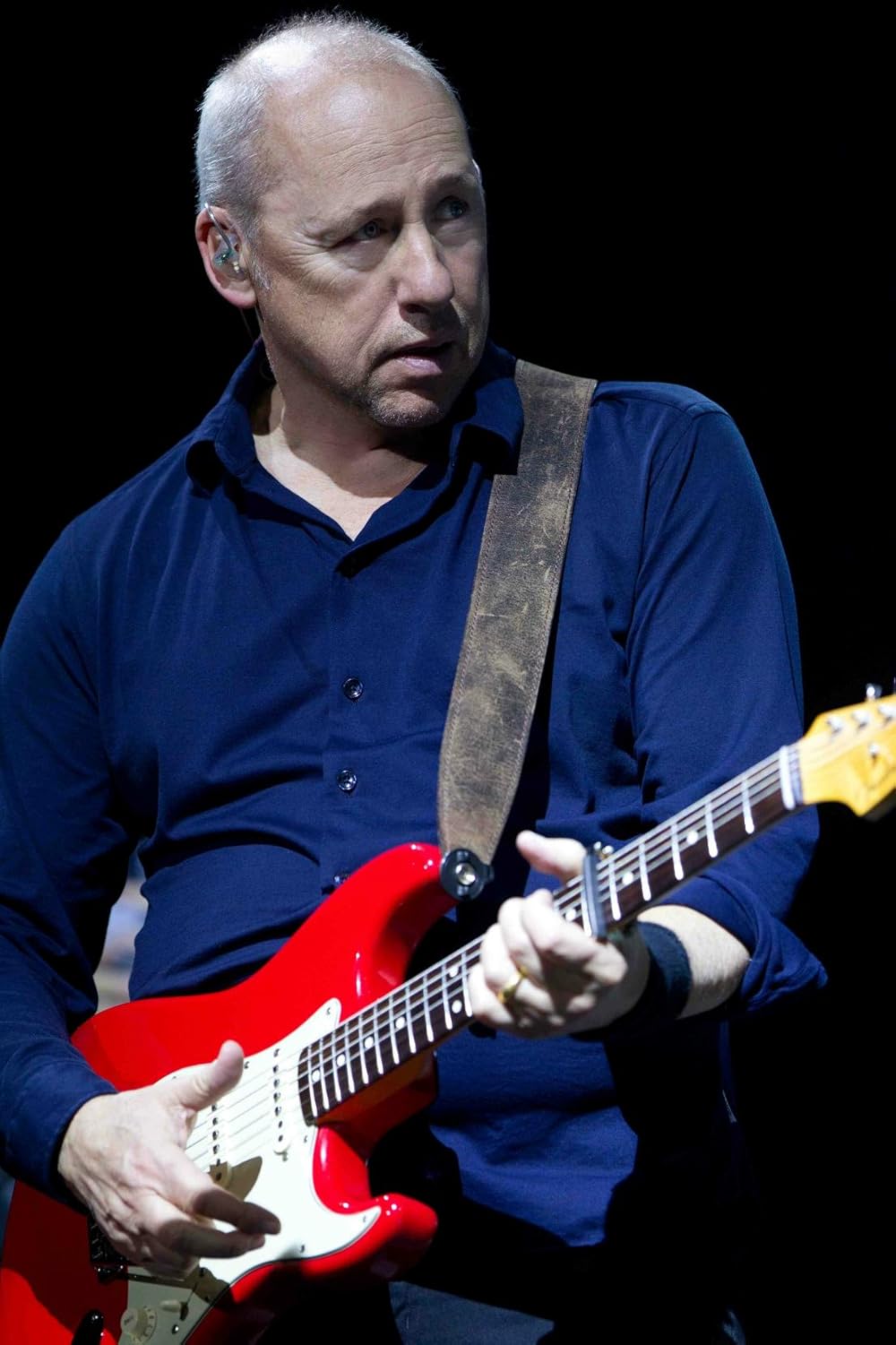
Mark Knopfler is widely celebrated as one of the most distinctive architects of rock history. As the frontman, virtuoso guitarist, and primary songwriter of Dire Straits, his fluid, finger picked style and cinematic storytelling offered a cool, melodic counterpoint to the raw punk explosion of the late 1970s. However, his journey to musical icon was neither instantaneous nor conventional.
Mark Freuder Knopfler was born on August 12, 1949, in Glasgow, Scotland. His household was built on a foundation of diverse heritage and intellectual resilience.
Mark's father, Erwin Knopfler, was a Hungarian Jewish architect. A man of deep anti fascist and socialist convictions, Erwin was forced to flee his native Hungary in 1939 to escape the rise of the Nazi regime. He was also an accomplished chess player. His mother, Louisa Mary Laidler, was an English schoolteacher.
When Mark was about seven years old, the family which soon included his younger brother, David relocated from Glasgow to his mother's hometown of Blyth, near Newcastle upon Tyne in North East England. Growing up in a relatively modest household that initially lacked modern luxuries like a family car or a television, Knopfler’s early life was instead filled with literature, academics, and a burgeoning fascination with sound.
Though his father initially taught him the basics of piano and violin, it was Knopfler’s uncle, Kingsley, who truly sparked his lifelong passion for music.
Mark once recalled that he heard his Uncle Kingsley playing boogie woogie on the piano when he was about eight or nine, and he thought that those three chords were the most magnificent things in the world and that he still felt that way.
Captivated by this experience, the young Knopfler fell in love with the guitar. He idolized the clean, echo laden sound of Hank Marvin of The Shadows, as well as the styles of legendary pickers like Chet Atkins, Scotty Moore, B.B. King, and Django Reinhardt.
He desperately wanted a Fiesta Red Fender Stratocaster just like Hank Marvin's, but the family budget couldn’t stretch that far. Instead, he had to settle for a 50 pound twin pickup Höfner Super Solid. To encourage him, his father bought him an electric guitar, though he famously didn't realize it required an amplifier to work. In an eager attempt to hear his new instrument, a teenage Knopfler plugged it into the family radio, accidentally destroying the appliance.
By the mid 1960s, Knopfler was fully immersed in the local music culture. He formed anonymous schoolboy bands and, at age 16, even made an appearance on local television as part of a folk harmony duo with his classmate, Sue Hercombe.
Before committing fully to the precarious life of a musician, Knopfler pursued a pragmatic career path in writing and academics.
In 1968, after studying journalism for a year at Harlow Technical College, he was hired as a junior reporter in Leeds for the Yorkshire Evening Post. Showing early signs of his deep musical immersion, he was given the task of writing Jimi Hendrix’s obituary in September 1970 simply because he was the only person in the newsroom young enough to know who Hendrix was.
Knopfler eventually chose to further his education, graduating with a degree in English Literature from the University of Leeds in 1973. Throughout his university years, he kept one foot in the music world. He recorded a demo disk of an original song called Summer's Coming My Way in 1970 and performed around Leeds with a band called Silverheels.
Upon graduating in 1973, Knopfler moved to London to actively chase a music career. The transition was brutal. He initially found himself destitute and sleeping on an ambulance stretcher in a freezing room.
He briefly joined a High Wycombe based pub rock band called Brewers Droop. It was during this period that a happy accident permanently reshaped his guitar style. Spending the night at a friend's house, the only instrument available was an old acoustic guitar with a badly warped neck. To make it playable, it had been strung with extra light strings. Knopfler found the only way to squeeze clean notes out of it was to ditch his guitar pick entirely and pluck the strings with his fingers. He later reflected that this was where he found his voice on guitar.
To secure a stable income, Knopfler took a job as an English lecturer at Loughton College in Essex, a post he held for three years. He used his salary to buy a motorcycle and his father's old car, giving him the means to haul his guitars to local pub gigs. He performed with a bluesman named Steve Phillips in a duo called The Duolian String Pickers, and led a local pub band called the Café Racers.
The turning point came in 1977. Mark's younger brother, David, moved to London and shared a flat in Deptford with a sociology student and bass player named John Illsley. In April 1977, Mark gave up his own flat and moved in with them.
The trio began jamming late into the night. Recognizing a distinct chemistry, Mark invited Illsley to join his musical circle. They eventually recruited a propulsive session drummer named Pick Withers. Padded with egg cartons on the walls of their council flat to keep the peace with neighbors, the band began intensely rehearsing a set of original songs Mark had written, heavily inspired by his time in Newcastle, Leeds, and London.
Originally gigging under Mark's old moniker, the Café Racers, a friend pointed out their grim financial reality that they were completely broke. Capitalizing on their financial plight, they officially renamed themselves Dire Straits.
In the summer of 1977, Dire Straits scraped together enough money to record a five song demo tape, which included a track titled Sultans of Swing.
The lineup consisted of Mark Knopfler on lead vocals and lead guitar, David Knopfler on rhythm guitar, John Illsley on bass guitar, and Pick Withers on drums.
They handed the tape to London disc jockey Charlie Gillett, who hosted the Honky Tonkin' show on BBC Radio London. Gillett played Sultans of Swing on air, and the listener response was instantaneous. Record executives swarmed, leading to a contract with Phonogram’s Vertigo label in the UK and Warner Bros. Records in the United States.
By the time their self titled debut album dropped in October 1978, Mark Knopfler's journey from a 28 year old college lecturer to an international rock icon was fully realized. His childhood infatuation with three simple chords had evolved into a signature, cinematic sound that would go on to sell hundreds of millions of records globally.