Listen

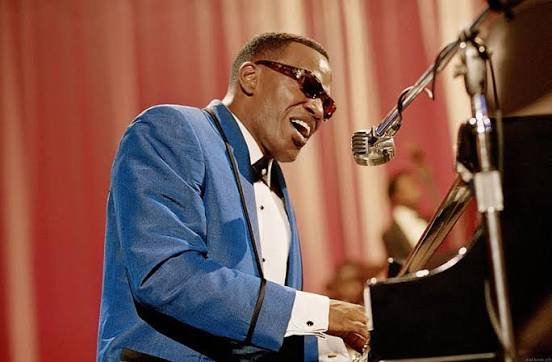
Few figures in American music loom as large as Ray Charles. Often called The Genius, he did not just sing the songs of his era; he revolutionized them. By blending gospel, blues, country, and jazz, he single-handedly helped invent soul music.
But behind the iconic sunglasses and the joyful swaying at the piano lay a story of profound hardship, resilience, and sheer talent.
Ray Charles Robinson was born on September 23, 1930, in Albany, Georgia, during the height of the Great Depression. His early life was marked by extreme poverty and immense personal tragedy.
When Ray was only four years old, he witnessed his younger brother, George, tragically drown in a laundry tub. Not long after, Ray began losing his sight, likely due to juvenile glaucoma. By age seven, he was completely blind.
Instead of letting him succumb to self-pity, Aretha fiercely taught her son how to navigate the world without sight. She famously told him that he was blind, not stupid, and that he had lost his sight, not his mind.
Ray's musical education began informally at a local café run by a man named Wylie Pitman, who played the boogie-woogie piano. Fascinated by the sound, a young Ray would sit on Pitman's lap as he played.
Recognizing his talent and needing a specialized education for him, Aretha sent Ray to the Florida School for the Deaf and the Blind in St. Augustine. It was here that his formal training exploded. He learned to read and write music in Braille. He mastered the piano, clarinet, saxophone, and trumpet. He also grew immersed in classical music, studying Bach and Mozart, while secretly listening to jazz and blues radio stations at night.
Tragedy struck again when Ray was fifteen, as his mother died suddenly. Now an orphan, he left school to make a living as a traveling musician, playing across Florida in various dance bands.
To escape the familiar southern circuits and forge his own path, seventeen-year-old Ray moved across the country to Seattle, Washington. He shortened his name to Ray Charles to avoid confusion with boxing champion Sugar Ray Robinson.
In Seattle, he formed the McSon Trio. Early on, Ray closely imitated his idols, Nat King Cole and Charles Brown. He scored minor rhythm-and-blues hits, but he had not yet found his unique artistic voice.
That changed in 1952 when Atlantic Records bought his contract. Ray's true breakthrough came when he stopped imitating others and leaned into his upbringing. He took the emotional fervor, call-and-response style, and rhythms of the church gospel music he grew up with, and married them to the secular, worldly lyrics of the blues.
In 1954, he recorded I've Got a Woman. It was an instant sensation, topping the rhythm and blues charts and officially marking the birth of soul music.
His masterpiece run continued through the late 1950s and 1960s. The track What'd I Say became a crossover pop smash utilizing the electric piano. Then came Georgia on My Mind, which earned him his first Grammy Awards, followed by Hit the Road Jack, which cemented his global superstar status.
In 1962, he shocked the music industry by releasing Modern Sounds in Country and Western Music. Defying segregation-era expectations, a Black soul artist covered traditional country tracks, earning massive critical acclaim and proving that music transcends genre boundaries.
While music occupied most of his life, Ray Charles was a man of diverse interests. He refused to let his blindness limit his leisure time, engaging in hobbies that surprised many.
Ray Charles passed away in 2004, leaving behind a staggering legacy of seventeen Grammy Awards, a pioneering spot in the Rock and Roll Hall of Fame, and a permanent imprint on the DNA of modern music. He proved that no matter how difficult the beginning, genius combined with unyielding resilience can change the world.