Listen

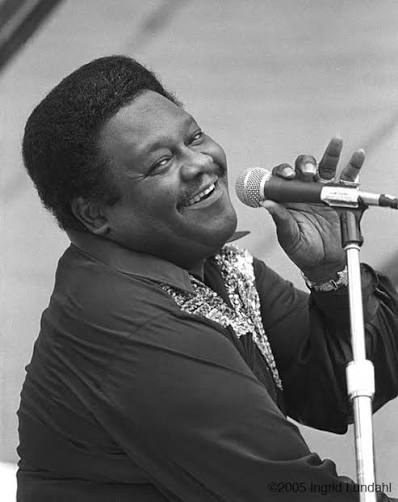
Long before the term "rock and roll" became a global youth phenomenon, a soft-spoken, piano-playing Creole artist from New Orleans was quietly laying down its blueprint. Antoine "Fats" Domino Jr. did not command the stage with wild, acrobatic showmanship; instead, he sat quietly behind a piano bench, flashing a warm, gold-toothed smile and rolling out infectious boogie-woogie rhythms.
Selling more than 65 million records, Domino became one of the defining musical titans of the 20th century. Yet, his journey to international stardom began far away from the glitz of Hollywood, rooted deeply in the rich, multicultural soil of Louisiana.
Antoine Domino Jr. was born on February 26, 1928, in New Orleans, Louisiana, the youngest of eight children born to Antoine Caliste Domino and Marie-Donatille Gros.
A Creole Heritage: The Domino family was of French Creole descent, having recently moved to New Orleans’ Lower Ninth Ward from the sugarcane fields of Vacherie, Louisiana. Because of their background, French Creole was young Antoine’s first language. His mother was of Haitian origin, and his father—a part-time violin player who worked at a local racetrack—instilled a baseline appreciation for music in the household, where neighborhood parties frequently featured live instruments.
A Musical Awakening: Despite being a naturally shy child, Domino’s life changed around 1938 when his family acquired an old, discarded upright piano. His brother-in-law, a local jazz and blues guitarist named Harrison Verrett, began patiently teaching him chords. Domino took to the instrument with staggering speed.
Early Hardship: Facing the impoverished conditions designated for Black schools in the Jim Crow-era South, Domino dropped out of school in the fourth grade. To help support his family, he took manual labor jobs, including working as a helper to an ice delivery man—hauling heavy blocks of ice before the widespread use of refrigerators.
During his teenage years, Domino spent his nights absorbing the vibrant local music scene. He frequented neighborhood bars where he could listen to loud, frenetic jukebox boogie-woogie records, which heavily shaped his signature rolling piano style.
In 1947, he married his lifelong spouse, Rosemary Hall, with whom he would eventually have eight children. Around this time, his musical reputation began to grow. He played small gigs at fish fries and local joints until local bandleader Billy Diamond heard him play at a backyard barbecue.
The Birth of a Moniker: Impressed by his talent, Diamond recruited Domino to play at the Hideaway Club in New Orleans for $3 a week. Because Domino had put on a bit of weight and loved to eat, Diamond dubbed him "Fats"—a nickname that stuck and became permanently etched into music history.
The turning point of Domino’s life occurred in 1949 at the Hideaway Club. Bandleader, songwriter, and producer Dave Bartholomew—alongside club scouts—came to see the young pianist. Recognizing an utterly unique talent, they brought Lew Chudd, the owner of Hollywood-based Imperial Records, to watch Domino perform. Chudd signed him on the spot.
Later that year, Domino entered Cosimo Matassa's legendary J&M Studio on Rampart Street in New Orleans. Teaming up with Dave Bartholomew, they reworked a local blues tune into a track titled "The Fat Man".
A Watershed Moment: Driven by Domino's rolling piano triplets, a heavy backbeat, and his playful scat vocals ("wah-wah"), "The Fat Man" became an absolute smash. Music historians frequently cite it as one of the very first rock and roll records, and it went on to sell over a million copies.
Throughout the early and mid-1950s, Fats Domino transformed from a regional R&B favorite into a national powerhouse. While many early rock and roll tracks were covered by white pop artists to reach mainstream audiences, Domino’s records crossed over organically.
Hits like "Ain’t That a Shame" (1955) and his definitive 1956 cover of "Blueberry Hill" made him a household name. He achieved an astonishing 35 Top 40 singles on the U.S. charts, becoming a peer and inspiration to icons like Elvis Presley (who famously dubbed Domino "the real king of rock 'n' roll") and The Beatles.
Despite his massive global fame and wealth, Fats Domino remained remarkably humble, choosing to live in his beloved Lower Ninth Ward of New Orleans for nearly his entire life. He passed away in 2017 at the age of 89, leaving behind a legacy as the gentle giant who helped invent the soundtrack of modern youth culture.