Listen

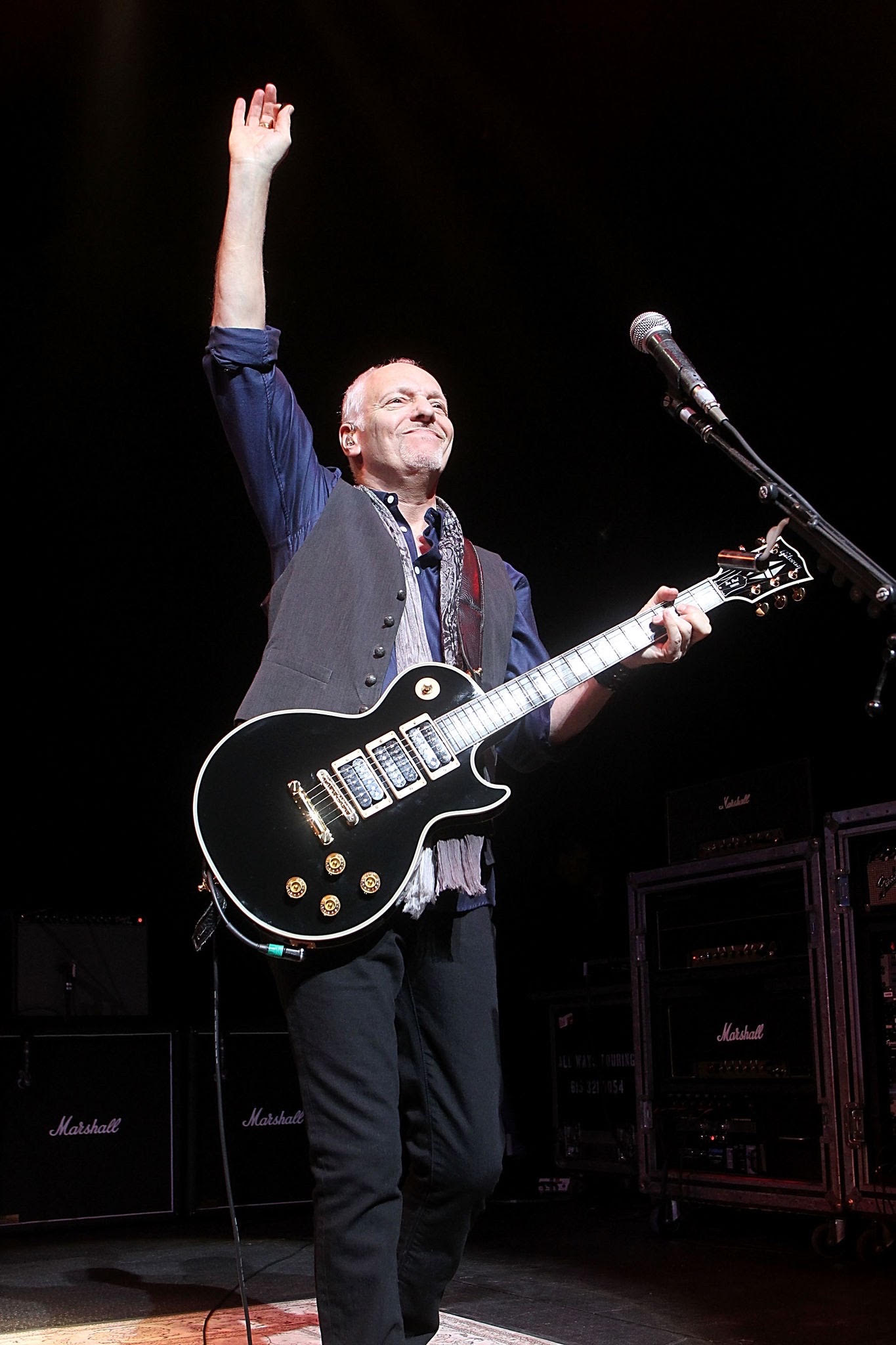
Few artists capture the golden age of 1970s arena rock quite like Peter Frampton. Renowned for his soaring melodic guitar work, distinct talk-box effect, and boyish charm, Frampton went from being a teenage pop idol in swinging '60s London to one of the biggest solo rock superstars on the planet.
Born Peter Kenneth Frampton on April 22, 1950, in Beckenham, Kent, England, he grew up in a supportive middle-class household. His father, Owen Frampton, was a school teacher and the head of the art department at Bromley Technical High School, while his mother, Peggy, also encouraged his creative pursuits.
Frampton’s musical spark ignited around the age of seven when he discovered his grandmother’s old banjolele tucked away in the attic. Recognizing his early dexterity and fascination with sound, his parents bought him a cheap acoustic guitar and enrolled him in classical guitar lessons by age eight.
His school years would also shape music history in unexpected ways. At Bromley Technical High School, young Frampton shared lunch breaks with a fellow student three years ahead of him—David Bowie. Guided by Frampton’s father (who taught Bowie art), the two teenagers would frequently sit on the stone steps of the school's art block to jam out on acoustic guitars and cover Buddy Holly songs.
By his early teens, Frampton was already playing in local teenage bands like The Little Ravens and The Trubeats. His parents, cautious about him playing late-night gigs while still a student, closely vetted his bandmates to ensure they were responsible young men.
At just 16, Frampton left school to turn professional, joining the freakbeat/pop group The Herd as lead singer and guitarist. The band scored several British chart hits, and teenage magazine Rave famously crowned Frampton "The Face of 1968".
Eager to move away from pure teen-pop and stretch his wings as a serious instrumentalist, an 18-year-old Frampton teamed up with Steve Marriott of Small Faces in 1969 to form the pioneering hard-rock/blues band Humble Pie.
After a few successful years with Humble Pie, Frampton launched his solo career in 1972 with the album Wind of Change. Though his early solo records established him as a respected musician and collaborative session player (recording with icons like George Harrison), global superstardom was just around the corner.
It was during a 1970 session with George Harrison that Frampton was introduced to the talk box—an audio effect device that allowed him to route his guitar signal through a plastic tube into his mouth, shaping the notes into vocalized speech. He weaponized this signature sound on tracks like "Show Me the Way" and "Do You Feel Like We Do".
In 1976, Frampton released a double live album capturing his energetic concert performances. Frampton Comes Alive! became a runaway cultural phenomenon, spending weeks at the top of the charts and turning into one of the best-selling live albums of all time. Songs like "Baby, I Love Your Way" and "Do You Feel Like We Do" became permanent staples of classic rock radio.
While the massive, whirlwind success of the late '70s was tough to sustain, Frampton continued to evolve. He reconnected with childhood friend David Bowie as the lead guitarist on Bowie's 1987 Glass Spider Tour, revitalizing his mainstream presence. Over the decades, he has continued to tour, release critically acclaimed instrumental albums (such as his Grammy-winning Fingerprints in 2006), and embrace his status as a guitar god.
In 2019, Frampton revealed a diagnosis of Inclusion Body Myositis (IBM), a progressive muscle disorder. True to his resilient spirit, he embarked on a farewell tour and continues to share his love for the guitar with audiences whenever possible, cementing a musical legacy that stretches all the way back to an art block in Beckenham.