Listen


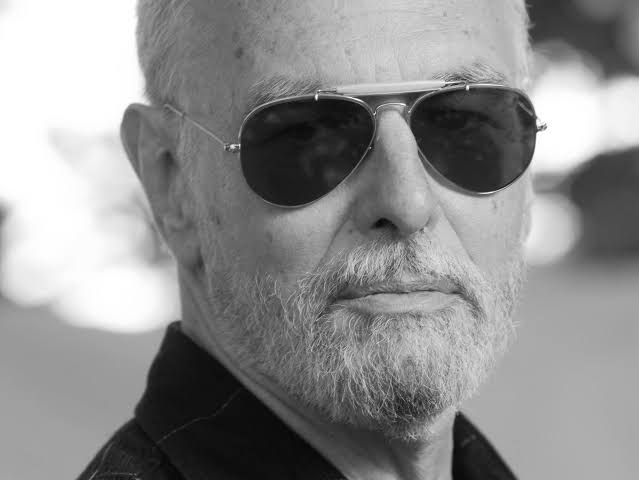
Few voices define the warm, melodic sound of 1970s soft rock quite like David Gates. As the primary singer, songwriter, and driving creative force behind the legendary band Bread, Gates crafted a catalog of heartfelt ballads and polished pop-rock classics that became staples of radio airwaves around the world. His path to becoming one of the era's most recognizable hitmakers began in the heartland of America, shaped by a household where music was a daily way of life.
David Ashworth Gates was born on December 11, 1940, in Tulsa, Oklahoma. From infancy, he was immersed in melody, rhythm, and musical theory thanks to his parents. His father, Clarence Gates, worked as a high school band director, while his mother, Wanda Rollins, was a dedicated piano teacher.
Growing up in a home filled with instruments and sheet music gave Gates an early and comprehensive education. Rather than focusing on a single instrument, he developed fluency across several, mastering the piano, bass, and guitar before he even reached his late teens. By the time he enrolled at Tulsa's Will Rogers High School, Gates was already an accomplished multi-instrumentalist performing in local bands around the city. One of his earliest groups, The Accents, featured a young piano player named Claude Russell Bridges, who would later achieve fame as rock icon Leon Russell. During these formative years, Gates also married his high school sweetheart, Jo Rita, in 1959, beginning a lifelong partnership that would anchor him through the highs and lows of the entertainment industry.
Seeking broader opportunities, Gates relocated with his young family to Los Angeles in 1961. Rather than stepping straight into the spotlight as a solo performer, he initially built a reputation behind the scenes as a versatile session musician, arranger, and songwriter.
Throughout the early and mid-1960s, Gates worked in recording studios alongside an impressive roster of established stars, including Elvis Presley, Bobby Darin, Merle Haggard, Duane Eddy, and Brian Wilson. His songwriting talents gained national attention in late 1963 and early 1964 when his composition "Popsicles and Icicles," recorded by the vocal trio The Murmaids, climbed to number three on the Billboard Hot 100. He also penned "Saturday's Child," which appeared on The Monkees' debut album, and even stepped into the producer's chair for early recordings by Captain Beefheart.
In 1967, Gates produced and arranged the debut album for a Los Angeles psychedelic folk-rock band called The Pleasure Fair, which featured guitarist and keyboardist Robb Royer. Recognizing their strong musical chemistry, Gates and Royer teamed up with singer-songwriter Jimmy Griffin in 1968 to form a new group called Bread.
Signed to Elektra Records, the band released a self-titled debut album in 1969 that drew modest attention. Everything changed in 1970 with their second album, On the Waters, propelled by the Gates-penned ballad "Make It with You". The song soared to number one on the Billboard Hot 100, establishing Bread's signature sound: lush vocal harmonies, delicate acoustic arrangements, and sincere romantic lyrics.
Between 1970 and 1973, Bread became one of the most commercially successful groups in pop music. With Gates writing and singing the majority of their major singles, the band delivered a remarkable string of Top 10 and Top 20 hits, including "It Don't Matter to Me," "If," "Baby I'm-a Want You," "Everything I Own," "The Guitar Man," and "Aubrey". Despite their commercial triumph, creative tensions between Gates and co-leader Jimmy Griffin over musical direction led to the group's breakup in 1973. They briefly reunited in 1976 for the album Lost Without Your Love, scoring another Top 10 hit with its title track before parting ways once more.
Following Bread's initial split, Gates launched a successful solo career that showcased both his romantic balladry and his ambition as an arranger. His 1973 solo debut, First, yielded the Adult Contemporary hit "Clouds", followed in 1975 by Never Let Her Go, whose title track reached the Top 30 on the pop charts.
His biggest solo triumph arrived at the end of 1977 when he wrote and recorded "Goodbye Girl" as the theme song for the Neil Simon romantic comedy of the same name. The track became a Top 15 hit in early 1978, leading to a successful compilation album that also produced the hit single "Took the Last Train". Gates continued releasing solo records into the early 1980s, including Falling in Love Again and Take Me Now.
By the mid-1980s, financial security from his publishing royalties allowed Gates to step back from the relentless pace of the music business. He relocated to a cattle ranch in Northern California, dedicating his energy to ranching and family life with his wife and four children. Though he occasionally returned to the stage—including a celebrated Bread reunion tour in 1996 and 1997—and released the country-tinged solo album Love Is Always Seventeen in 1994, Gates largely embraced a quiet life away from the spotlight. Today, his songs remain enduring fixtures of classic radio, celebrated for their timeless craftsmanship and emotional warmth.